






Most people think fixing a chipped tooth or closing a small gap is only about how the tooth looks. But with dental bonding, the material used matters too. Different composite resins can vary in their makeup, which is especially important for patients who care about whole-body health. A more holistic approach considers both sides of the treatment, how the tooth looks when it is finished, and what materials are placed in your mouth.
At Club K Holistic Dental in Springfield, Missouri, Dr. Joshua Knapton approaches cosmetic dentistry through a biological lens. As the only biological ceramic doctor in the Springfield area and a certified BioClear provider, Dr. Knapton is committed to using dental bonding materials that are both effective and biocompatible. For patients who want a natural-looking smile without compromising their overall wellness, our approach to dental bonding offers a meaningful alternative to conventional methods.
What Is Dental Bonding and How Does It Work?
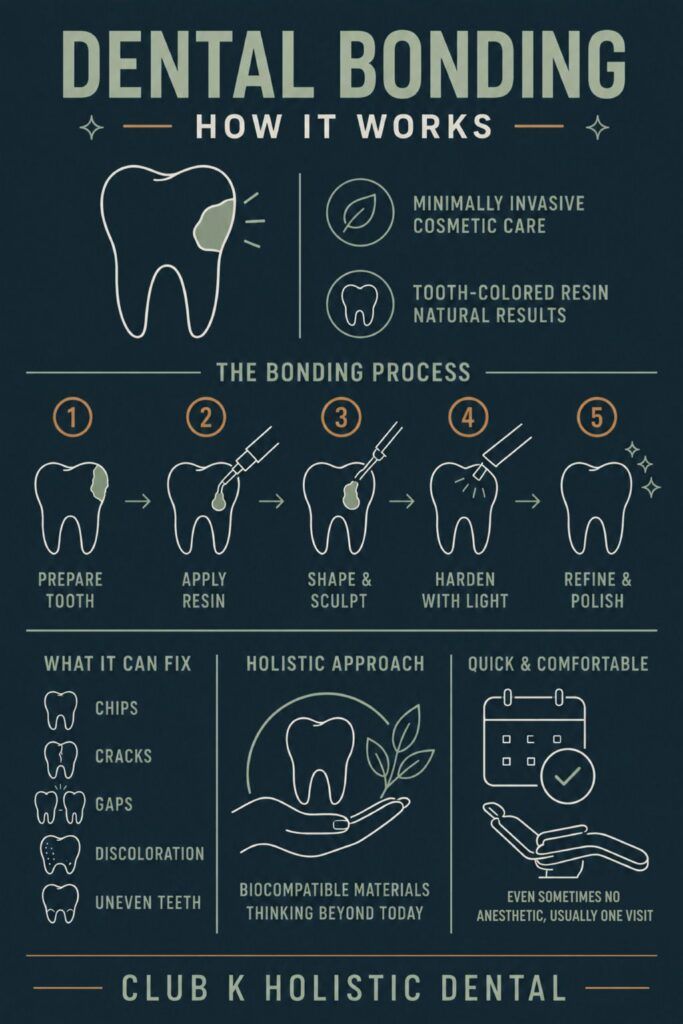
Dental bonding is a minimally invasive cosmetic procedure that uses tooth-colored resin to repair or improve the appearance of a tooth. The resin is applied to the tooth, shaped, and hardened with a curing light, even sometimes without anesthesia and usually in a single visit. It can be used to fix chips, cracks, and gaps, improve discoloration, or reshape uneven and worn teeth. In a holistic dental office, bonding also includes careful consideration of the materials used and how they may interact with the body over time.
The Problem With Conventional Bonding Materials
Many standard composite resins used in dental bonding contain BPA derivatives, such as Bis-GMA, a monomer linked to potential endocrine-disrupting effects. A systematic review published in PMC found that urinary BPA concentrations increase in the short term following dental treatment with resin-based materials, raising questions worth considering for health-conscious patients. While the long-term implications remain an area of ongoing research, the concern is legitimate enough that patients should ask what is in the materials placed in their mouths.
Why Material Selection Matters in Holistic Dentistry
The mouth is not isolated from the rest of the body. What is placed on and around your teeth can interact with your oral environment, your saliva, and, over time, your systemic health. This is a foundational principle of holistic dentistry, which is why Dr. Knapton carefully selects bonding materials based on biocompatibility rather than defaulting to whatever is most widely used. Our goal is to support your overall wellness, not just the appearance of your smile.
A Biocompatible Approach to Dental Bonding
At Club K Holistic Dental, dental bonding is performed using materials selected for their safety and biocompatibility. Dr. Knapton’s BioClear certification also gives him advanced training in minimally invasive techniques that support a natural-looking result while respecting the health of the tooth. Instead of looking at bonding as just a cosmetic fix, he considers how the materials used may work with your body over time.
For patients who may have sensitivities or who simply want greater assurance about what is being placed in their mouth, we can discuss material options in detail before any treatment begins. This level of personalized care is what sets a biologically focused practice apart from a conventional one. You can also learn more about our philosophy on biocompatible dental materials to better understand how we approach every procedure. Patients considering a more substantial rebuild rather than a small repair may also want to learn about BioClear restorations, a related technique that uses the same biocompatible composite philosophy on a larger scale.
Bonding vs. Veneers: Which Is Right for You?
Both dental bonding and dental veneers can address cosmetic concerns such as chips, gaps, and discoloration, but they differ in durability, cost, and the extent of tooth structure involved. Bonding is generally less invasive and more affordable, while veneers tend to offer greater longevity and a more uniform result. The right choice depends on the condition of your teeth, your aesthetic goals, and your overall health picture. Dr. Knapton will walk through your options thoroughly so you can make a fully informed decision.
How Long Does Dental Bonding Last?
Dental bonding typically lasts between three and ten years depending on the location of the repair, your bite, and how well the bonded tooth is cared for. Front teeth used mainly for biting rather than heavy chewing tend to hold up longer than bonding placed on a back molar that absorbs more force. Avoiding habits like nail-biting, chewing ice, or using teeth as tools can meaningfully extend the life of a bonded restoration, and routine exams and cleanings allow us to catch early wear before it becomes a bigger repair.
Caring for Bonded Teeth
Bonded teeth are cared for much like natural teeth, with a few extra considerations. Composite resin can stain more easily than natural enamel in the months after placement, so limiting dark beverages like coffee, tea, and red wine, or rinsing with water after consuming them, helps preserve the color match. Brushing twice daily, flossing, and avoiding biting down on hard objects protect the edges of the bonding from chipping. If a bonded tooth ever feels rough, sharp, or different from the surrounding teeth, it is worth having it evaluated rather than waiting for the next scheduled visit.
Thinking About Making a Change to Your Dental Health?
Club K Dental offers a holistic, whole-body approach to dentistry in Springfield, MO. Whether you're exploring ceramic implants, fluoride-free care, or simply looking for a dentist who listens — we'd love to meet you.
Frequently Asked Questions About Holistic Dental Bonding
Is dental bonding painful?
Dental bonding is usually painless and often does not require anesthesia, since the procedure typically does not involve removing significant tooth structure. Most patients describe the process as quick and comfortable.
Can dental bonding be whitened later?
Composite resin does not respond to whitening treatments the way natural enamel does, so it is best to whiten your teeth before bonding is placed if brightness is a goal, since the bonding will be shade-matched to your teeth at that time.
What holistic considerations go into choosing a bonding material?
Dr. Knapton evaluates composite resins based on their chemical composition, including whether they contain BPA-related compounds, and prioritizes materials with a stronger biocompatibility profile so the restoration works with your body rather than introducing unnecessary chemical exposure.
Can bonding be repaired if it chips?
In most cases, a chipped section of bonding can be repaired or touched up without redoing the entire restoration, which is one of the practical advantages of bonding compared to some other cosmetic options.
Is dental bonding a good option for a permanent fix?
Bonding is considered a long-lasting but not permanent solution, generally needing replacement or touch-up after several years depending on wear and location. Patients who want a longer-lasting result for multiple teeth may want to discuss veneers or BioClear restorations as alternatives.
Experience Toxin-Free Cosmetic Dentistry at Club K Holistic Dental
Dr. Joshua Knapton earned his dual DMD and MBA from Roseman University of Health Sciences and holds memberships with the IAOMT and AGD. His BioClear certification allows him to offer beautifully shaped, minimally invasive bonding results using techniques that align with the biological values that guide every service at our practice. Cosmetic improvement and whole-body health are not competing priorities here.
If you are ready to explore dental bonding with a provider who considers your smile and your health, we invite you to reach out to our team and schedule a consultation. At Club K Holistic Dental, every cosmetic decision starts with your well-being.